What is Google Ads and How Does it Work?
When someone searches Google for a product, service, or solution your business provides, being visible at that moment can put your brand directly in front of a potential customer.
Google Ads gives businesses a way to earn that visibility through paid advertising.
But Google Ads has grown well beyond the text ads you may recognize at the top of a search results page. Businesses can use the platform to advertise products, generate leads, reach prospective customers on YouTube, reconnect with previous website visitors, build awareness, and appear across many of Google's properties and partner sites.
Understanding what Google Ads is and how Google Ads work can help you determine where paid advertising fits into your broader marketing strategy and whether it makes financial sense for your business.
Table of Contents
- What is Google Ads?
- How Google Ads Work
- Pay-per-Click (PPC) Model
- How the Google Ads Auction Works
- Ad Rank
- What Helps Improve Google Ad Performance
- What Are the Benefits of Google Ads?
- What Are the Main Types of Google Ads?
- Google Search Ads
10. Google Shopping Ads
11. Video Ads
12. Demand Gen Ads
13. Display Ads
14. Performance Max
15. Local Service Ads / Performance Max With Pay-Per-Lead Goals
16. How Much Do Google Ads Cost?
17. Who Should Use Google Ads?
18. Are Google Ads Worth it for Your Business?
What is Google Ads?
Google Ads is Google's online advertising platform. Businesses use it to promote products and services to people across Google Search, YouTube, Gmail, Maps, Discover, the Google Display Network, and other eligible placements.
Depending on the campaign,
ads can help generate website traffic, phone calls, leads, online purchases, store visits, video engagement, or brand awareness.
Google Ads is different from organic Google visibility. SEO focuses on earning unpaid visibility by improving your website and its relevance and authority over time. Google Ads allows you to pay to compete for advertising placements. Both can put a business in front of potential customers, but they use different strategies to get there.
Google Ads was previously known as Google AdWords, so you may still hear both terms used. Today, Google Ads encompasses a much broader advertising ecosystem than the search-focused platform its former name might suggest.
How Google Ads Work
At its simplest, Google Ads connects advertisers with potential customers based on signals such as what someone searches for, the content they consume, their location, their interests, and the audiences an advertiser wants to reach.
How that happens depends on the campaign type. Search campaigns, for example, can match ads to relevant searches. Performance Max uses Google's automation to find opportunities across multiple Google channels based on an advertiser's goals.
Pay-per-Click (PPC) Model
Google Ads is often described as pay-per-click advertising, or PPC, because many advertisers pay when someone clicks their ad rather than simply when the ad appears.
However, not every Google Ads campaign uses the same pricing model. Depending on the campaign and objective, advertisers may optimize or pay around clicks, conversions, views, impressions, or leads.
The larger principle remains the same: businesses establish a budget and advertising goals, and Google uses those inputs to determine when and where eligible ads can compete.
How the Google Ads Auction Works
For Search ads, an auction occurs when someone searches and eligible advertisers can compete for available advertising positions.
Winning isn't simply a matter of spending the most. Google evaluates several factors to determine which eligible ads appear and how they rank.
Ad Rank
Ad Rank is the set of values Google uses to determine whether an ad is eligible to appear and, when eligible, how it ranks relative to competing ads.
Several factors influence it.
Your Bid
Your bid represents how much you're willing to pay for a desired action, such as a click. A stronger bid can make an advertiser more competitive, but the highest bidder does not automatically earn the best position.
Ad Quality and Relevance
Google considers the quality and usefulness of the ad and its landing page. A relevant ad that closely addresses what someone wants and directs them to a useful landing page can compete more effectively than an advertiser relying on a large bid alone.
Competition
Who else is participating in an auction matters. Competitive industries and valuable searches may have more advertisers competing for limited placements.
Search Context, Location, and Other Signals
Google can also consider the context surrounding a search, including the search terms, device, location, time, other results on the page, and additional user signals.
That means there isn't one fixed Google search ranking that an advertiser permanently buys. Eligibility and position can change from auction to auction.
What Helps Improve Google Ad Performance
Successful campaigns require more than turning on ads and increasing the budget. The pieces of the campaign need to work together.
Match Keywords & Search Intent
For Search campaigns, identify the searches most closely connected to your products or services and, more importantly, the searches that indicate meaningful business intent. Traffic alone isn't the goal. Qualified traffic is.
Create Relevant Ads
Ad messaging should connect the user's need with the solution you're offering. Strong ads set clear expectations about what happens after the click and give the searcher a compelling reason to choose your business.
Build Strong Landing Page Experiences
The job isn't finished when someone clicks.
Your landing page should continue the conversation started by the ad, make the next action clear, load efficiently, work well across devices, and give visitors the information they need to make a decision.
Set a Competitive Bidding Strategy
Bidding should reflect the campaign's actual business objective. That might mean prioritizing clicks while gathering early data or optimizing toward conversions, cost per acquisition, or return on ad spend as sufficient conversion data becomes available.
What Are the Benefits of Google Ads?
The benefits of Google Ads extend beyond simply getting your company to the top of a search.
Reach Potential Customers Quickly
Unlike strategies that can require months to build momentum, an eligible Google Ads campaign can begin generating visibility soon after launch.
Drive High-Intent Traffic
Search advertising provides an especially valuable opportunity: reaching someone who is actively looking for what you sell.
A search for "commercial HVAC repair near me," for example, signals a much different level of intent than someone casually encountering an HVAC company elsewhere online.
Target the Audiences That Matter Most
Google Ads provides targeting options based on factors such as location, audience characteristics, interests, search behavior, remarketing audiences, and more. The available targeting depends on the campaign type.
Measure Performance and Business Results
With the right conversion tracking in place, businesses can connect advertising activity to actions such as calls, form submissions, purchases, appointments, and other meaningful outcomes.
That turns advertising from "we received more traffic" into a more useful question: What did that traffic do for the business?
Scale Campaigns as Your Business Grows
Campaigns can evolve with your goals. A company might expand into additional markets, increase investment in profitable products, test new services, or introduce additional campaign types as it develops more data and budget.
Strengthen Your Visibility Across Google
Google Ads doesn't have to replace SEO. The two can support different parts of the same visibility strategy.
SEO can build sustainable organic visibility while paid campaigns create additional opportunities across Google's advertising inventory. Together, they give your brand multiple ways to appear throughout Google's evolving search experience instead of depending on a single placement.
What Are the Main Types of Google Ads?
Choosing among the types of Google Ads depends on what you sell, who you need to reach, where they are in their buying process, and what you want them to do next.
Google Search Ads
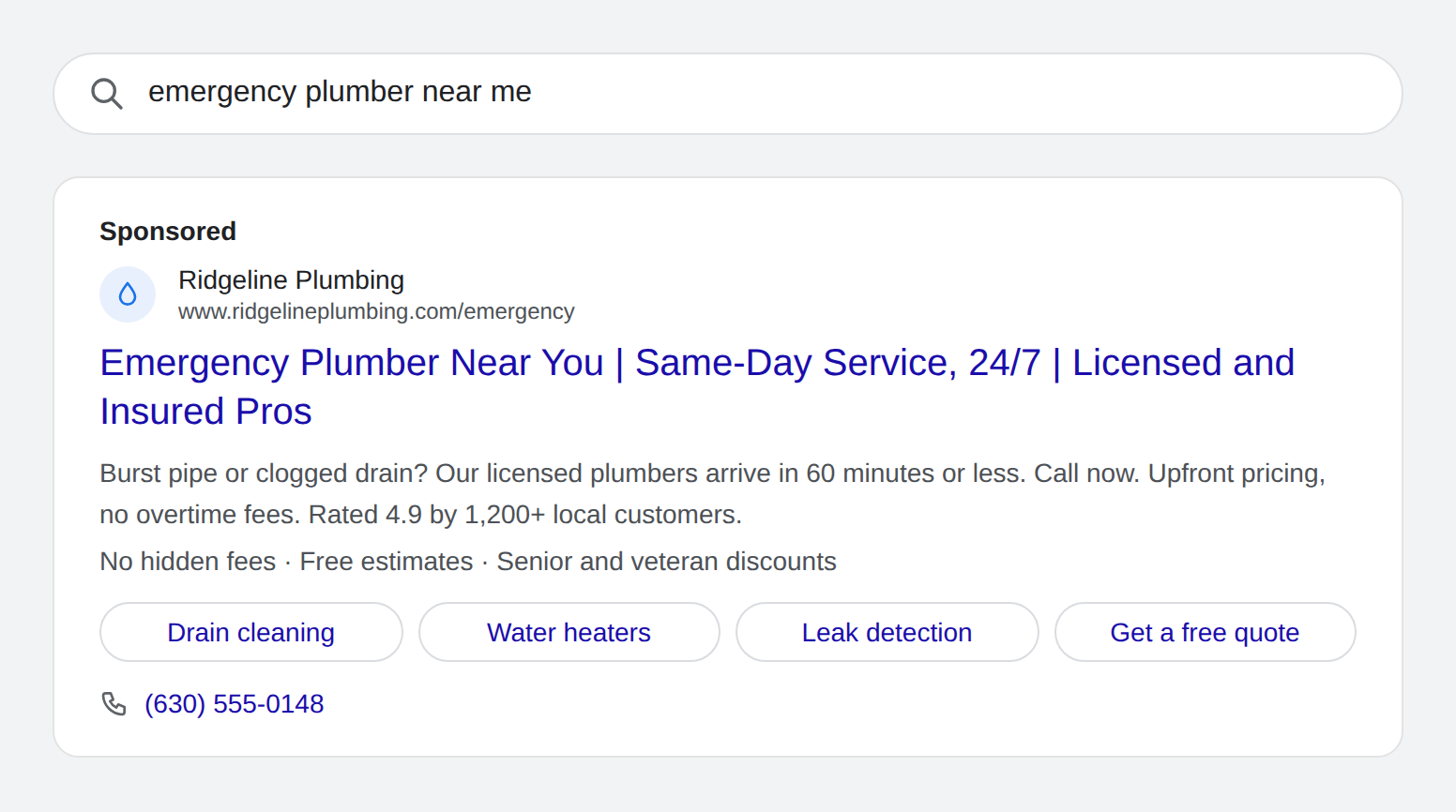
Search ads can appear on Google search results when someone searches for something relevant to an advertiser's targeting.
They're particularly well suited to businesses that want to capture existing demand, such as someone searching for an attorney, software provider, manufacturer, dentist, contractor, or another specific product or service.
Google Shopping Ads
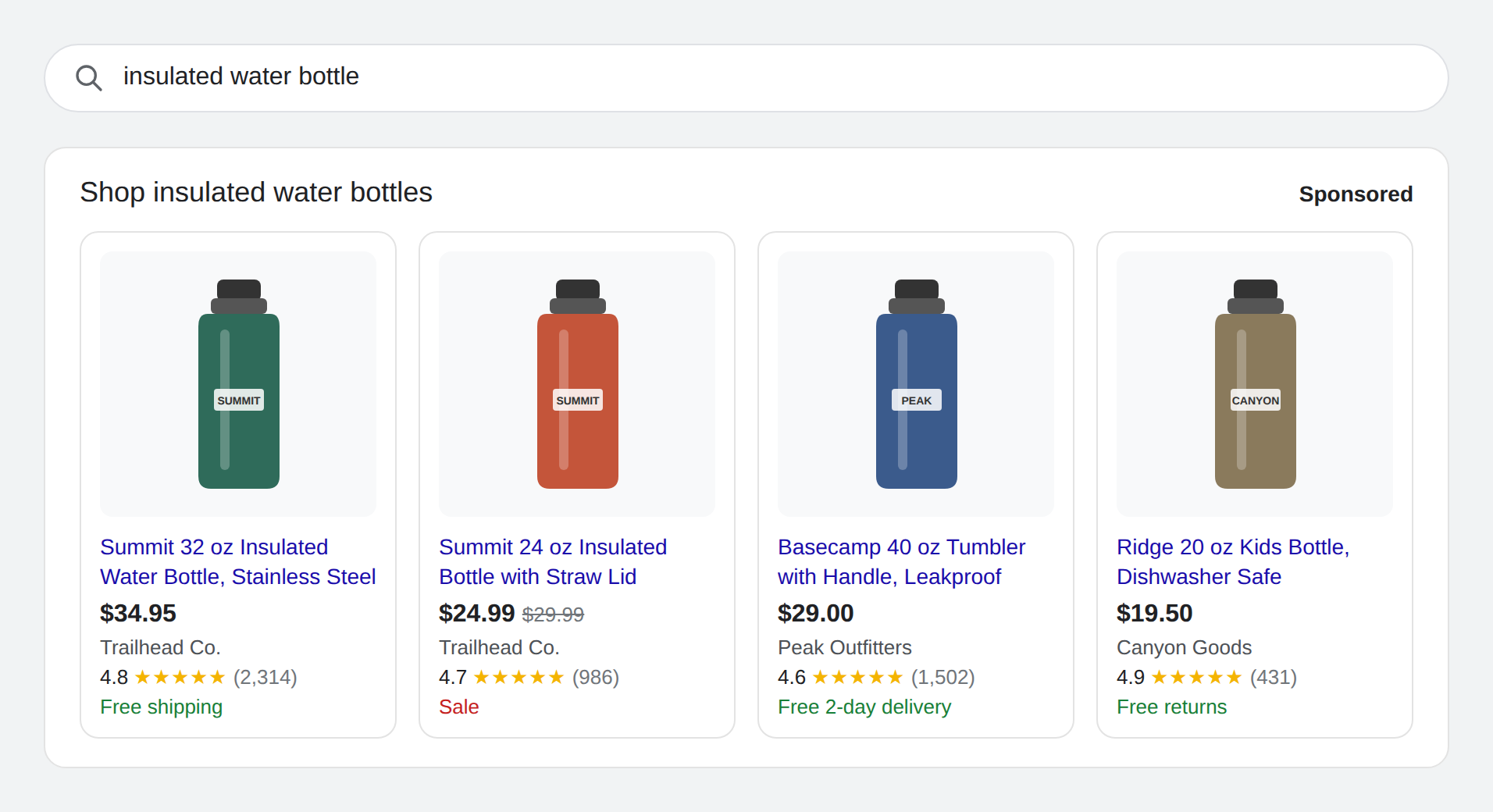
Shopping ads are designed for retailers. They can display product information such as an image, title, price, and store name, allowing shoppers to evaluate products before visiting the advertiser's website. Google uses product information from Merchant Center to help match relevant products to searches.
They're best suited to ecommerce and retail businesses with products that can be maintained through a strong, accurate product feed.
Video Ads
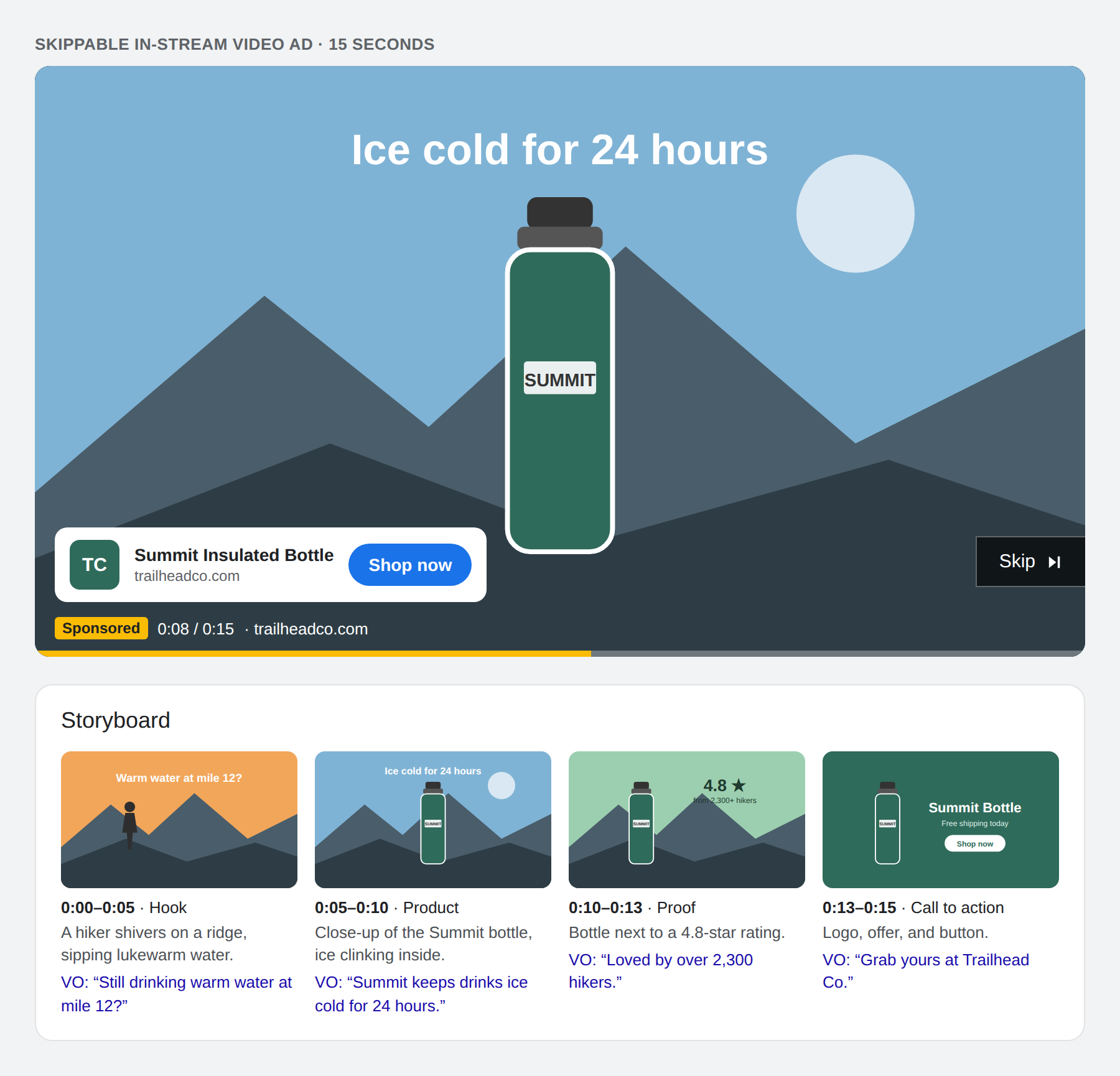
Video campaigns allow advertisers to reach people through YouTube and eligible Google video partners using formats including in-stream, in-feed, bumper, and YouTube Shorts ads.
They're particularly useful when demonstrating a product, telling a brand story, building awareness, or reaching audiences through engaging visual creative.
Demand Gen Ads
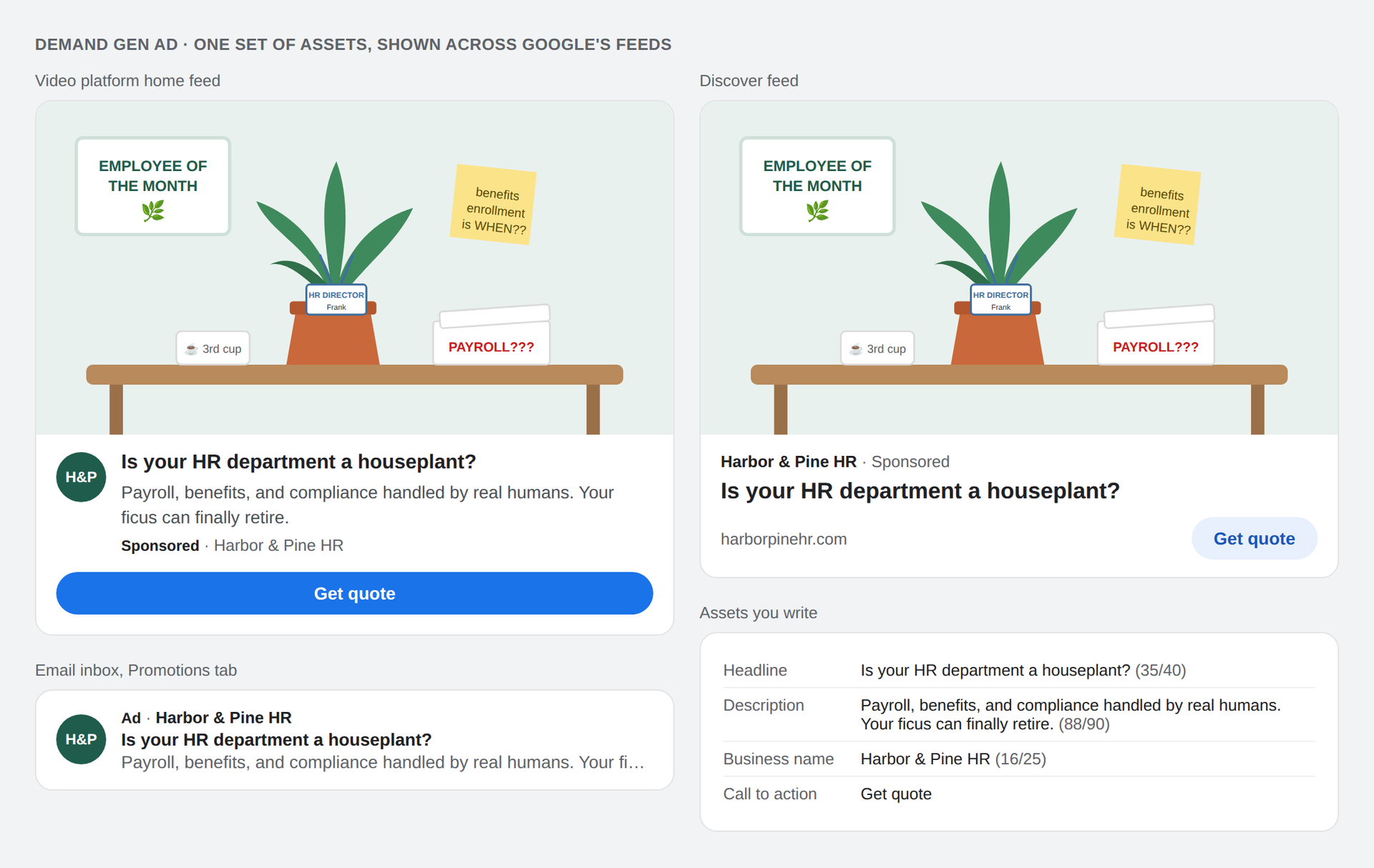
Demand Gen campaigns help businesses create and convert demand across visual Google surfaces including YouTube, Shorts, Discover, Gmail, Maps, and the Google Display Network.
They're useful when you want to reach potential customers before or while they're actively considering their options rather than waiting exclusively for a direct search.
Display Ads
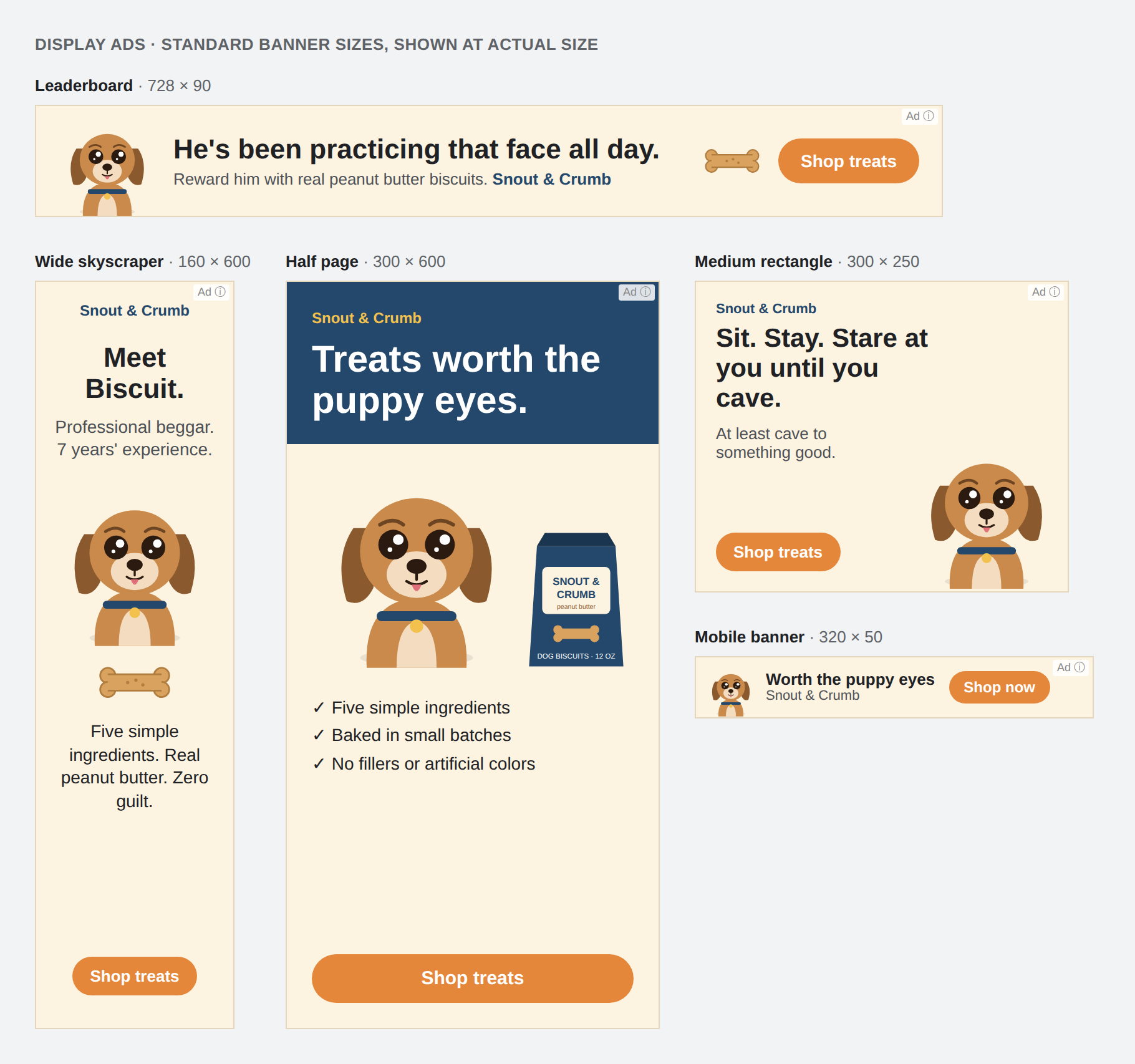
Display advertising uses visual ads across websites and apps within the Google Display Network. Historically, advertisers managed these through standalone Display campaigns.
That structure is changing. In 2026, Google began moving
Google Display Ads campaigns into Demand Gen, where Google Display Network inventory joins surfaces such as YouTube, Discover, Gmail, and Maps. Eligible advertisers began receiving migration tools in June 2026, with Google indicating that new campaign creation and remaining eligible campaign migrations will move under Demand Gen.
Performance Max
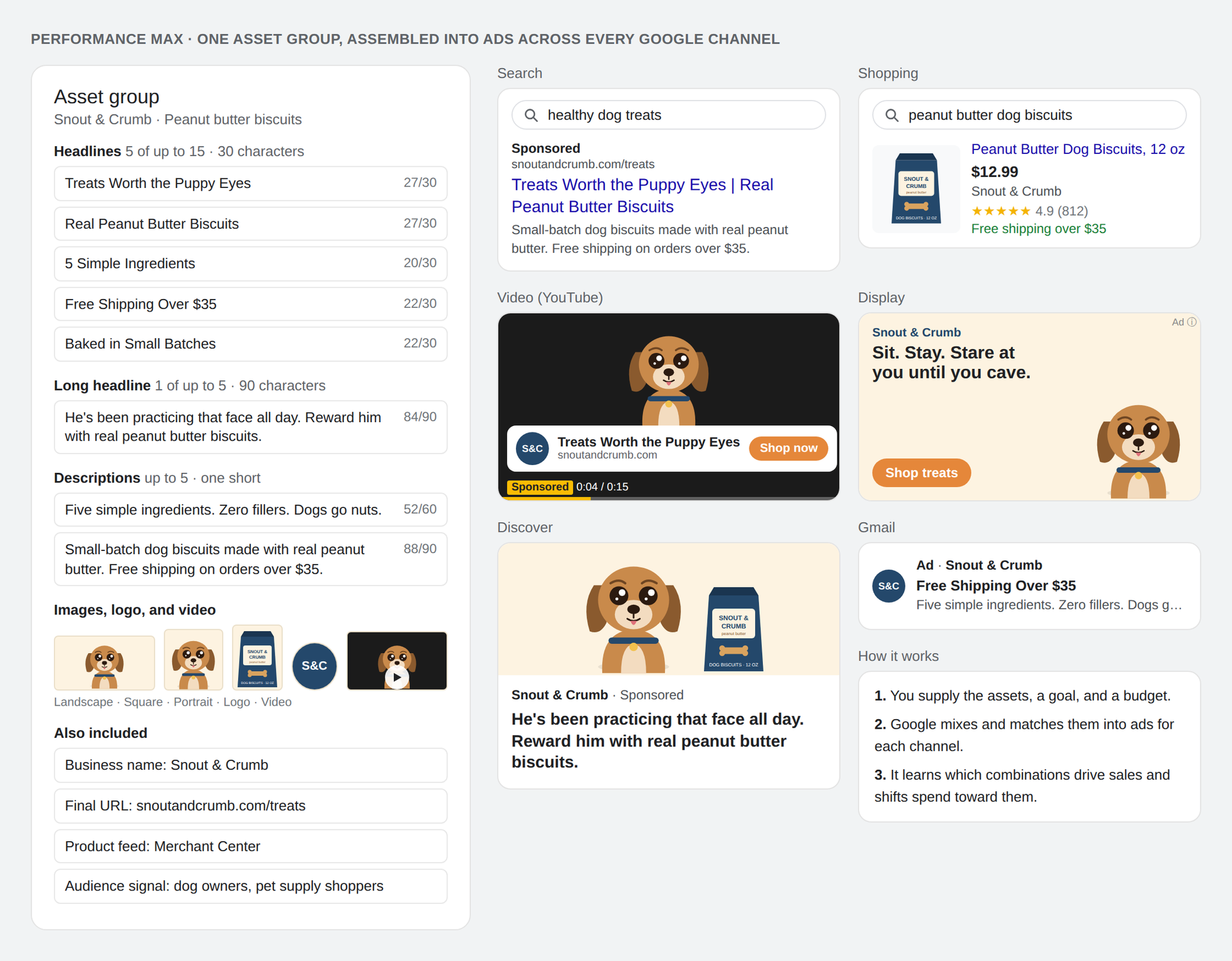
Performance Max is a goal-based campaign type that can access Google's advertising inventory across Search, YouTube, Display, Discover, Gmail, and Maps from one campaign. Google uses automation to optimize bidding and placements toward the conversion goals an advertiser provides.
It can be particularly useful for businesses focused on ecommerce sales, lead generation, or expanding conversion opportunities beyond keyword-based Search.
Local Services Ads / Performance Max With Pay-Per-Lead Goals
Local Services Ads have traditionally helped eligible service businesses appear prominently on Google Search and Maps and pay for leads rather than clicks.
In August 2026, Google officially began transitioning select U.S. home and storefront service advertisers from Local Services Ads into
specialized Performance Max campaigns with pay-per-lead goals. Google says the migration will expand to broader advertiser groups later in 2026 and continue internationally and across remaining categories in 2027. The locations where these ads appear on Search and Maps are expected to remain the same.
How Much Do Google Ads Cost?
There isn't a universal Google Ads price.
Costs depend on variables including your industry, campaign type, keywords, geographic market, competition, targeting, ad quality, bidding strategy, and the value of the actions you're trying to generate. There is no single recommended bid that works for every advertiser.
For that reason, asking "How much should we spend?" is usually less useful than asking what can we afford to pay to acquire a profitable customer or lead?
Start with the economics of the business: average sale or customer value, margins, close rates, acceptable acquisition costs, and growth goals. Those numbers can help establish what an appropriate advertising investment looks like.
Who Should Use Google Ads?
Google Ads can support companies of many sizes, but that doesn't mean every business should immediately start spending.
Google Ads May Be a Strong Fit If...
You have clear demand for your products or services, understand the value of a new customer, can support an appropriate advertising budget, have a website capable of converting traffic, and can accurately track meaningful conversions.
It's also valuable when you need to reach people at specific moments of intent or want a measurable channel that can scale alongside proven performance.
Google Ads May Not Be the Right First Step If...
If your website isn't ready to convert visitors, your margins can't support customer acquisition costs, you don't have reliable conversion tracking, or you're unclear about who you're trying to reach, fixing those foundations may produce more value than immediately increasing ad spend.
Advertising can amplify a strong customer journey. It can also amplify weaknesses in one.
Are Google Ads Worth it for Your Business?
So, is Google Ads worth it?
It can be, but only when the economics, business goals, campaign strategy, tracking, and ongoing management align.
The real question isn't whether Google Ads "works." It's whether you can use the platform to acquire customers or generate business outcomes at a cost that makes sense for your organization.
That requires knowing what a conversion is worth, measuring the right actions, and continuously allocating investment toward the campaigns, audiences, searches, and products producing meaningful results.
Why Google Ads Requires Ongoing Management
Google Ads is not a set-it-and-forget-it platform.
Competition changes. Search behavior changes. Creative fatigues. Products and margins change. New data creates opportunities to adjust targeting and budgets. Google itself continuously changes the platform.
For example, Google updated its
target-based bidding systems on August 17, 2026, changing how budget-limited campaigns using strategies such as Target CPA and Target ROAS respond to budget adjustments.
Google Marketing Live 2026 also introduced and expanded advertising capabilities across Search, YouTube, commerce, measurement, creative, and AI-powered ad experiences.
Ongoing management is how advertisers respond to those changes while continuing to test search terms, bids, audiences, creative, landing pages, campaign structure, and budget allocation.
The goal isn't activity for activity's sake. It's making informed adjustments as the market, platform, and performance data evolve.
What Successful Google Ads Can Look Like
The value of Google Ads becomes clearer when strategy connects directly to business economics.
For one
online pet pharmacy, our team focused its Google Ads strategy around product feed improvements, campaign structure, best-selling products, seasonal demand, and Performance Max.
Over approximately one year, the campaign generated roughly $400,000 in revenue with a 7.08 ROAS.
The takeaway isn't that every company should expect the same numbers. Results depend on the business, market, margins, competition, budget, website, offer, and many other variables.
The more useful lesson is that Google Ads works best as a managed growth system: understand what creates value for the business, build campaigns around those priorities, measure what happens, and use the resulting data to make the next decision.
Ready to Turn Google Ads Into a Growth Channel?
Understanding how Google Ads work is the first step. Turning the platform into a sustainable source of qualified traffic, leads, and revenue requires a strategy built around your specific business.
At RivalMind, we work alongside businesses to develop and manage Google Ads campaigns around measurable goals, from campaign structure and
targeting to bidding, creative, conversion tracking, and ongoing optimization.
If you're evaluating Google Ads or wondering whether your current campaigns could be doing more, explore RivalMind's Google Ads management services or talk with our team about your goals.
Looking for more organic website traffic?
Welcome to RivalMind. Our purpose is to help your business thrive. We are a digital marketing agency that offers SEO, PPC, Web Design, Social Media and Video Solutions as tools to our clients for online business development and growth.
Contact us today to get started!
Blog Contact Form
We will get back to you as soon as possible.
Please try again later.