Google AI Overviews’ Impact on Organic Traffic in 2026: What the Data Actually Shows (and What to Do About It)
Your organic traffic is down, but your rankings have barely moved. You are still publishing content, your website appears in search results, and the reports offer few clear explanations. Meanwhile, headlines about AI search suggest everything between a modest disruption and the collapse of SEO.
The evidence supports a more specific conclusion: Google AI Overviews can reduce clicks substantially for certain searches, especially searches that a summary can answer. The effect on your business depends on which queries bring people to your website, what those visitors need, and how much revenue those visits support.
Understanding Google AI Overviews’ impact on organic traffic in 2026 requires looking beyond a single industry average. You need to separate lost rankings, changing search demand, and reduced clicks at otherwise stable positions. Each problem calls for a different response.
Is AI Search Actually Hurting Organic Traffic in 2026? The Short Answer
Yes, research shows that searches displaying AI Overviews can earn fewer clicks to traditional results. However, a decline in your website’s traffic cannot automatically be attributed to AI.
In research published February 4, 2026, Ahrefs found that AI Overview presence correlated with a 58% lower click-through rate for the top-ranking page, relative to its modeled baseline. The analysis used December 2025 data, so it describes conditions entering 2026, rather than a full year of 2026 performance.
That finding deserves attention. It also needs context. A reduction in clicks for an exposed query group does not mean every business will lose the same percentage of total traffic.
A company whose visits depend heavily on basic definitions faces different exposure than a company attracting buyers seeking specifications, consultations, or product demonstrations. Your starting point should be the searches behind your traffic loss, followed by the business value those searches previously delivered.
What Are Google AI Overviews?
Google AI Overviews are generated summaries that appear within search results for some queries. They bring information together and include links to supporting sources.
An answer can satisfy part of a searcher’s need before that person visits a website. Someone asking for a definition may find enough information in the summary. Someone evaluating a complex purchase may still need documentation, evidence, or a conversation.
How AI Overviews Are Triggered
Google says its systems display AI Overviews when they add value to conventional search. AI Overviews and AI Mode may use “query fan-out,” issuing related searches across subtopics to develop a response. Consequently, the supporting pages can extend beyond the results for the original wording. This explanation appears in Google’s documentation updated December 10, 2025.
How Google Selects Sources and Citations
Google does not publish a formula that guarantees citation selection. Treat promises of guaranteed inclusion cautiously.
For background on the feature, see RivalMind’s explanation ofGoogle AI Overviews. For planning purposes, distinguish three outcomes: appearing in conventional results, receiving a citation, and earning a visit. Measure them separately.
The Data: How Much Is Organic Traffic Really Declining in 2026?
There is no single percentage that describes every website’s loss. Studies examine different query groups, devices, audiences, and outcomes.
Organic CTR Decline, by the Numbers
| Source and publication date | What the study measured | Main finding |
|---|---|---|
| Ahrefs, February 4, 2026 | Desktop CTR across 300,000 keywords, comparing December 2023 and December 2025 | AI Overview presence correlated with 58% lower position-one CTR against a modeled baseline |
| Pew Research Center, July 22, 2025 | Browsing behavior associated with 68,879 Google searches conducted during March 2025 | Traditional-result clicks occurred on 8% of visits with an AI summary, versus 15% without |
| Seer Interactive, April 2026 | A tracked cohort covering January 2025 through February 2026 | Organic CTR on AI Overview queries increased to 2.4% in February after reaching 1.3% in December |
These findings measure different things. Ahrefs examines a page’s CTR at a ranking position. Pew examines actions following visits to search results. Seer tracks performance across a selected brand and query cohort. Their percentages should not be substituted for one another.
Zero-Click Search Growth
SparkToro’s June 8, 2026 research reported that
68.01% of U.S. Google searches ended without a click during January through April 2026, using Similarweb clickstream data. Its historical comparison uses different panels, and the research does not isolate AI Overviews’ contribution to that total.
Zero-click behavior also includes searches resolved through other search features or followed by another query. It is a broader measure than lost clicks to your website.
Semrush’s December 15, 2025 study adds a useful complication: its before-and-after keyword cohort showed a decrease in zero-click rate after AI Overviews appeared. That analysis measures any-click behavior across selected queries, rather than clicks to the top-ranking organic page.
Which Industries and Query Types Are Hit Hardest?
Semrush’s November 2025 keyword sample found greater AI Overview prevalence in Science, Computers & Electronics, and People & Society than in Real Estate or Shopping. Those are exposure measurements, not percentages of industry traffic lost.
Your content mix matters within any industry. An educational publisher explaining scientific concepts and a training provider attracting enrollment inquiries may face very different risks.
The 2026 Stabilization: Where CTR Is Rebounding
Seer’s April 2026 report recorded an approximately 85% relative CTR rebound between December 2025 and February 2026 for its AI Overview query group. Its methodology applies a recent
AI Overview classification retrospectively, so the finding should not be treated as a causal experiment or a forecast of universal recovery.
The practical lesson is to investigate your own trajectory. A historical decline does not establish that every segment will continue declining.
Is AI Search Hurting Organic Traffic for B2B Companies Specifically?
B2B companies can lose visits when their content answers questions that summaries can resolve. The commercial significance depends on the role those visits played in the buying process.
Why B2B Informational and Comparison Content Is More Exposed
Consider searches such as “what is managed IT,” “ERP versus CRM,” or “how does industrial traceability work.” A summary can handle an initial explanation. A visitor who previously opened several websites may now continue researching without visiting any of them.
This creates a particular concern for businesses that used introductory content to build remarketing audiences or email lists. Losing those visits can shrink future opportunities, even when immediate lead totals remain steady.
However, exposure does not make informational content worthless. An original implementation example, a detailed comparison, or an explanation of costly mistakes can give readers a reason to explore further.
Review informational pages against a concrete question: what can someone learn or accomplish here that a short summary cannot provide?

Where B2B Traffic May Hold Steadier
Service, demonstration, specification, and branded searches can involve needs that require visiting the business itself. A buyer may need to confirm compatibility, discuss pricing assumptions, or evaluate a provider’s experience.
These searches deserve separate reporting. They are not immune to AI features: Semrush documented expansion into commercial, transactional, and navigational queries during 2025.
For B2B SEO, the priority is understanding which content helps buyers advance toward a decision. Protect those pathways while reassessing content that attracts large audiences with little connection to your services.
Beyond AI Overviews: Other Reasons Organic Traffic Is Dropping in 2026
Several changes can happen simultaneously. Assuming AI caused every decline can leave a fixable problem unresolved.
Algorithm Updates and E-E-A-T
Ranking changes can reduce visibility independently of AI Overview presence. Google recommends checking its ranking-update history and reviewing affected pages when investigating a drop.
Look for clusters: did several pages covering the same topic lose positions? Did competing pages offer stronger evidence or better satisfy the search?
Experience, expertise, authoritativeness, and trustworthiness, commonly abbreviated E-E-A-T, can inform that review. Google explicitly says E-E-A-T itself is not a specific ranking factor. Avoid treating it as a score or assuming an unexplained “E-E-A-T update” caused your decline.
LLMs and Answer Engines
Some prospects may conduct research through ChatGPT, Perplexity, or Gemini. However, falling Google impressions do not prove that your audience migrated to those platforms.
Ask customers how they researched their purchase. Review identifiable referral traffic and record AI-assisted discovery in sales conversations. Use that evidence to assess changes in your market.
Decoupled Rankings and Citations
A conventional ranking and an AI citation are different observations. A position report alone does not establish that your business appeared in a generated answer.
Maintain a separate record of cited URLs, brand mentions, and the context in which your business appears. That record can reveal visibility changes that a ranking chart misses.
SERP Crowding
Ads, maps, videos, shopping features, and other results can change the prominence of your listing. Inspect the actual search results when stable rankings produce fewer visits.
Generic Content
A page repeating common information offers readers limited reason to choose it. Google’s content guidance emphasizes original information and substantial added value.
Evaluate what your page contributes before deciding that more publishing will solve the problem.
Is My Organic Traffic Drop Caused by AI Overviews or Something Else?
Begin with hypotheses. Then gather evidence that supports or weakens each one.
Signal 1: Impressions and Positions Hold Steady While CTR Falls
This pattern is consistent with reduced click opportunities, including possible AI Overview effects. It can also reflect more ads, changed titles, different devices, or a shift toward queries that naturally earn fewer clicks.
Select the affected page, inspect its leading queries, and compare equivalent device and country segments. Check dated search-result captures if available.
A current AI Overview confirms current exposure. It cannot establish exactly when the feature appeared or explain an earlier decline without historical evidence.
Signal 2: Positions Also Decline
Investigate ranking and technical changes alongside AI exposure. Review competing results, page updates, redirects, internal links, and indexing status.
A ranking decline does not automatically establish that an algorithm update caused it. Multiple causes can overlap, including changes in which queries contribute to the reported average.
Signal 3: Impressions Decline
Lower impressions can reflect weaker demand, reduced rankings, seasonality, indexing problems, or changing search behavior.
Compare the same period last year and inspect topic-level demand. Ask sales teams about inquiry volume. Investigate migration to AI platforms when customer evidence supports it, rather than assigning that explanation through elimination.
How to Check Search Console and GA4
In Search Console, open the search-results Performance report. Compare matching periods and enable clicks, impressions, CTR, and average position.
Review the Pages and Queries tabs, then narrow the analysis through country and device filters. Google’s report documentation explains these dimensions and metrics.
Start with pages responsible for the largest absolute click losses. Separate branded searches, informational content, and service or product pages. A sitewide average can hide opposing trends.
In GA4, review Traffic acquisition using Session source / medium and isolate google / organic. Then examine landing-page behavior and relevant key events. Google documents this report structure and source filtering.
Finally, compare analytics with CRM outcomes. Search Console describes search performance; GA4 describes activity on your website. Their totals need not match, and neither alone establishes lead quality. Google’s guidance recommends using the tools together for these different purposes.
Which Pages and Keywords Are Most at Risk?
Prioritize pages according to both exposure and business consequences. A high-volume page with few meaningful outcomes may warrant less urgent intervention than a modest-traffic page supporting valuable inquiries.
Long-Tail and Question-Based Keywords
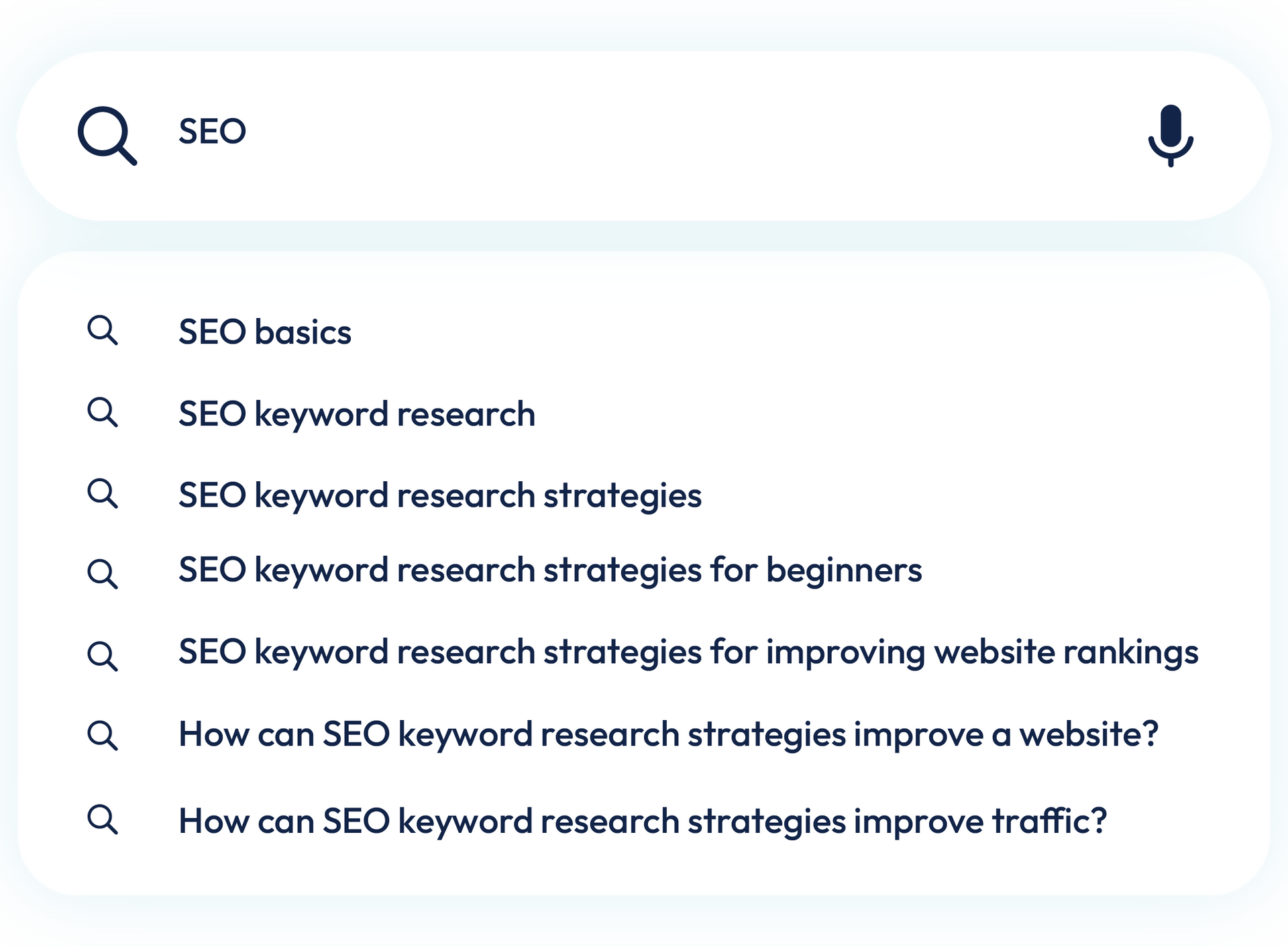
Pew’s July 2025 analysis found that longer searches and searches phrased as questions were more likely to produce AI summaries in its collected results. That supports reviewing question-led content, but it does not establish a current exposure rate for your market.
Look closely at definitions, simple process explanations, generic benefits lists, and comparisons that repeat broadly available information.
For each page, identify an opportunity to add useful depth: practical exceptions, original examples, decision criteria, or an actionable resource.
Informational Versus Transactional Exposure
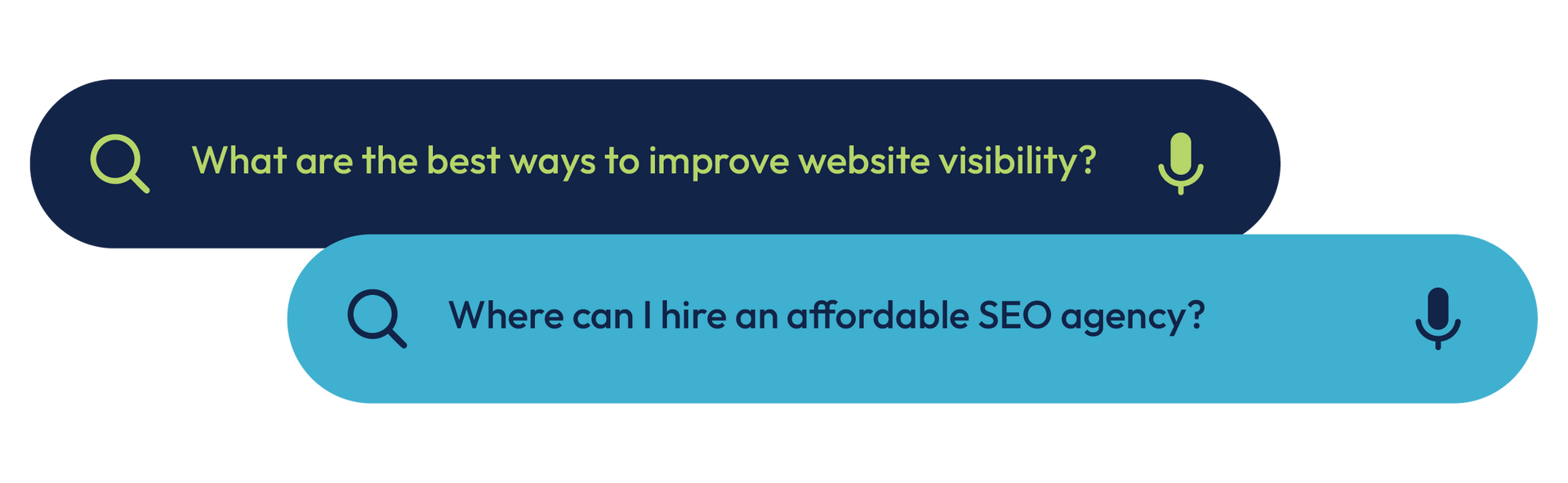
Distinguish the task behind the query. “What is inventory software?” and “inventory software demonstration for manufacturers” represent different needs.
An informational query may still attract an ideal customer. A transactional query may still produce an AI Overview. Avoid sorting pages into permanent safe and unsafe categories.
Instead, maintain a working assessment that combines observed AI exposure, CTR changes, ranking changes, and conversion contribution. Update it as evidence changes.
Why Lower Traffic Does Not Always Mean Your SEO Is Failing
Traffic loss deserves investigation. Its business impact requires another layer of analysis.
Traditional Clicks Versus Total Visibility
A business can appear in search results without receiving a visit. That exposure may influence recognition, but an impression does not prove someone noticed or remembered the brand.
Keep visibility measures alongside visits. Avoid treating them as interchangeable achievements.
Traffic Quality Over Traffic Quantity
Consider a hypothetical company whose sessions decline 20% while qualified inquiries remain stable. Its average yield per session has improved, but the lost visits still deserve review. They may have contributed to future demand.
Now consider a company whose sessions and qualified inquiries both decline. Better engagement among the remaining visitors would offer limited reassurance.
Assess lead quality, opportunity creation, sales-cycle timing, and revenue together. A smaller audience can be commercially productive, but that conclusion needs business evidence.
AI Citation and Discovery Growth
Citation tracking can show that your content appears in generated answers. It cannot independently establish revenue contribution.
Google currently includes AI-feature activity within Search Console’s Web reporting. That reporting does not provide a clean AI Overview-only performance total, which limits direct attribution.
Combine citation observations with customer feedback, referral data, and branded-search trends. Treat the relationship as a hypothesis until stronger evidence emerges.
How to Prevent Organic Keyword Fluctuations in an Unstable SERP
No strategy can prevent organic keyword fluctuations entirely. A more useful goal is reducing avoidable volatility and limiting the business consequences of changes.
Build Topical Depth Around Buyer Needs
Organize content around the questions your customers must resolve. For a training provider, those could include prerequisites, program formats, scheduling, costs, and application steps.
Each page should serve a distinct purpose and connect readers to the next relevant resource. Avoid expanding into unrelated subjects simply because they offer search volume.
Choose topics through customer interviews, sales questions, and existing conversion evidence. That creates a clearer relationship between publishing effort and business priorities.
Maintain Technical and Schema Fundamentals
Check important pages for unintended indexing restrictions, broken internal links, redirect problems, and inaccessible content.
Google requires supporting pages in its AI features to be indexed and eligible for a search snippet. It says no special AI schema or new machine-readable file is required.
Use appropriate structured data that accurately describes visible content, and validate the implementation. Google explains that structured data helps it understand page information; eligibility does not guarantee a particular search appearance.
Monitor Beyond Rankings
Maintain a change log covering major edits, migrations, tracking adjustments, and campaign launches. Review recurring query groups alongside page-level clicks and qualified outcomes.
For teams revisiting the basics, RivalMind’s explanation of what SEO services include can help frame the work. A monitoring routine should make the next decision clearer.
New Marketing Strategies for Declining Organic Traffic in 2026
The response should follow the diagnosis. Ranking losses, weak demand, and reduced CTR require different investments.
Make Content Useful to Readers and Easy to Cite
Generative engine optimization, or GEO, often describes efforts to improve visibility in generated answers. Translate that label into specific editorial work.
Provide direct answers, clear headings, documented examples, and transparent sourcing. Explain the scope and limitations of research. Use tables when readers need to compare options.
Give visitors a reason to continue: an original tool, detailed methodology, implementation advice, or evidence they can evaluate. Clear presentation can improve usability without promising citation selection.
Prioritize High-Intent Opportunities
Review service, pricing, comparison, and product pages against the questions prospects ask before contacting you.
Explain who the offering suits, relevant limitations, implementation requirements, and the next step. Replace vague claims with evidence your business can substantiate.
Preserve educational content that contributes to buying decisions. Reconsider production devoted to topics that attract attention without a plausible relationship to your customers.
Develop First-Party Data and Owned Channels
Publish findings your organization can support: anonymized operational patterns, survey results, documented experiments, or customer research.
Include collection dates, sample details, and limitations. A small transparent study is more useful than a sweeping claim built on unclear data.
Give interested visitors a reason to stay connected through email, webinars, or practical resources. Build follow-up around the need that prompted the signup.
Expand Where Your Audience Researches
Choose additional channels through audience evidence. Customer interviews may point toward professional communities, industry publications, LinkedIn, or video resources.
Start with one relevant channel and a repeatable format. For example, turn recurring implementation questions into short expert demonstrations and connect them to detailed website resources.
Assess qualified engagement and inquiries before expanding further.
Strengthen Brand Representation in Search Results
Check how your business is described across your website, profiles, reviews, and third-party references. Correct outdated information and make your specialization clear.
During citation reviews, record inaccurate descriptions as well as missing mentions. Visibility that misrepresents your services can create confusion.
Connect Organic Content to Paid Campaigns
Use paid search selectively where commercially valuable organic visits have declined. Evaluate query intent, landing-page readiness, and qualified acquisition cost before increasing investment.
Build remarketing audiences where appropriate consent and platform requirements are met. Promote resources that move prospects toward a decision.
Paid traffic should have its own business case. Replacing every lost session can be expensive and may recreate an audience that contributed little value.
What Metrics Matter More Than Traffic Now?
Keep traffic in the report, but connect it to a broader measurement framework.
| Metric | What it helps you assess | Main limitation |
|---|---|---|
| Qualified organic inquiries | Business opportunities generated through organic visits | Requires consistent qualification |
| Organic-sourced opportunities and revenue | Contribution to sales | Sales-cycle and attribution delays |
| CTR for stable query groups | Changes in click opportunity | Needs comparable query, device, and country segments |
| AI mention and citation frequency | Presence within sampled answers | Varies across prompts, platforms, and runs |
| Branded-search trends | Changes in interest in your business | Multiple channels can influence demand |
| Conversion-path observations | Organic participation before conversion | Tracking captures only part of the journey |
Share of Voice and Citation Frequency
Define the queries or prompts you monitor, the platforms involved, and the testing schedule. Record brand mentions separately from linked citations.
Avoid reporting a changing prompt set as a consistent trend. Note the market, device, and collection date where relevant.
Assisted Conversions and Branded Search Lift
A prospect may read educational content, return through a branded search, and later contact sales. Review available conversion paths and ask prospects about their research.
These observations help identify organic contribution. They do not prove that a particular citation caused a later inquiry.
Traffic Quality Over Volume
Agree on what a qualified inquiry means before comparing performance. Track suitable prospects, accepted opportunities, and eventual outcomes.
Review these measures across periods long enough to account for your sales cycle. A short-term traffic chart may move well before revenue does.
Why SEO, PPC, CRO, and Content Need to Work Together in 2026
A visitor can encounter your business through several touchpoints before contacting you. Coordinated work helps address the gaps between discovery and action.
Content should answer the questions buyers actually ask. SEO supports access and visibility. Paid campaigns can test commercially relevant demand. Conversion rate optimization, or CRO, examines what happens when visitors reach the website.
For example, an admissions page may attract suitable prospects but leave costs, prerequisites, or scheduling unclear. Additional traffic alone will not resolve that friction.
Share findings across teams. Paid-query data can reveal useful language. Sales conversations can expose unanswered questions. Organic landing-page performance can identify topics worth developing.
Set a shared objective such as qualified applications, consultations, or opportunities. Then evaluate each channel’s contribution and cost against that objective.
How to Respond to an Organic Traffic Drop: A Quick-Action Checklist
Use this sequence to move toward a concrete response:
- Confirm the decline. Compare matching periods and review analytics changes.
- Find the largest losses. Identify affected pages and queries using absolute clicks.
- Separate patterns. Examine ranking, impression, and CTR changes independently.
- Inspect search results. Record AI features, competing pages, ads, and other prominent elements.
- Check technical changes. Review indexing, redirects, internal links, and recent deployments.
- Measure business consequences. Compare qualified inquiries, opportunities, and sales timing.
- Choose a focused intervention. Address the strongest supported explanation first.
- Set a review date. Record the change and evaluate comparable performance afterward.
Keep the initial response manageable. Testing a specific improvement makes the outcome easier to interpret than changing every affected page at once.
If evidence remains incomplete, state that clearly in internal reporting. A precise account of uncertainty is more useful than an unsupported explanation that directs spending toward the wrong problem.
Traffic Is a Signal, Not the Whole Story
Organic traffic remains useful. Its meaning depends on who visits, what they need, and what happens afterward.
When visits decline, identify the searches responsible and evaluate their contribution to the business. That gives you a defensible basis for deciding what to repair, what to strengthen, and where to invest.
The broader question explored in SEO Isn’t Dead, It’s Just Getting Smarter remains relevant: how should search strategy evolve as discovery changes?
Your next decision should rest on measurable customer behavior and business outcomes.
FAQs
How Are Google AI Overviews Changing SEO in 2026?
They can answer questions before users visit websites, changing the relationship between rankings and clicks. SEO reporting should examine query-level CTR, observed AI exposure, and qualified outcomes alongside conventional visibility.
Is AI Search Hurting Organic Traffic for B2B Companies?
It can, particularly when content answers basic research questions. The impact depends on the company’s query mix and the commercial contribution of affected visits. Analyze informational and purchase-oriented pages separately.
How Much of My Traffic Drop Is Due to AI Overviews?
There is no reliable universal percentage. Compare stable query groups, review historical search-result evidence, and investigate competing explanations. Aggregate website metrics alone cannot isolate AI Overview effects.
How Can I Prevent Organic Keyword Fluctuations?
You cannot eliminate them. You can reduce avoidable problems through technical maintenance, useful content, and consistent monitoring. Diversifying acquisition also limits the consequences when search visibility changes.
Why Is Organic Traffic Down Even Though Rankings Have Not Changed?
Your listings may receive fewer clicks because of AI answers, ads, or other prominent features. Your query mix may also have changed. Check page and query segments before relying on a sitewide ranking average.
What Types of Searches Are Most Affected?
Questions that a concise answer can satisfy deserve particular scrutiny. Definitions, general explanations, and simple comparisons can be exposed. Validate that risk against the results appearing for your own queries.
Is SEO Dead Now That AI Answers Most Questions?
The premise is too broad. AI does not resolve every search or business need. SEO still supports discoverability and access to useful information, although some established measures and content priorities need reassessment.
What Are the Most Important SEO Priorities for 2026?
Diagnosing CTR changes, maintaining technical access, improving original content, and connecting visibility to qualified demand are practical priorities. Track AI representation where it matters to your audience, using a documented sampling method.
How Can Businesses Make Up for Lost Organic Visibility?
Choose the response that fits the loss. Improve affected pages, strengthen decision-stage content, develop owned audiences, and test relevant paid or distribution channels. Compare qualified acquisition costs and business outcomes before scaling investment.
How RivalMind Helps Brands Adapt to the AI Search Shift
A useful response starts with your business’s evidence. Which searches changed? Which pages lost visits? Did those losses affect qualified opportunities? What should the team address first?
RivalMind’s SEO services and AI search optimization offer relevant areas to explore when evaluating that response. You can also review our results to assess documented client outcomes.
The conversation should connect visibility to business priorities and establish practical measures of progress. If your reports show declining traffic without a clear explanation,
contact RivalMind to discuss the evidence and your next steps.
Looking for more organic website traffic?
Welcome to RivalMind. Our purpose is to help your business thrive. We are a digital marketing agency that offers SEO, PPC, Web Design, Social Media and Video Solutions as tools to our clients for online business development and growth.
Contact us today to get started!
Blog Contact Form
We will get back to you as soon as possible.
Please try again later.