How to Generate Revenue with Paid Ad Campaigns
Running paid ads can feel frustrating when the results don't match the investment. You might see clicks, impressions, or even leads, but if they aren't turning into revenue, it's easy to wonder where your budget is really going.
In many cases, the biggest challenge isn't getting people to click. It's understanding whether those clicks are actually helping your business grow.
That's why it helps to think about PPC as more than another marketing expense. When it's built around clear business goals and backed by reliable data, paid advertising becomes much easier to measure, improve, and scale. Pair that with a long-term SEO strategy, and you have one channel creating opportunities today while the other continues building visibility for the future.
Start With Revenue, Not Clicks
One of the biggest mistakes businesses make with paid advertising is measuring success too early. It's easy to focus on clicks, impressions, or even conversions because they're the numbers you see every day. The problem is that those metrics don't always tell you whether your campaigns are contributing to real business growth.
Instead, it helps to start with the outcome you're trying to achieve. How many new customers do you need? What does a qualified lead look like? How much can you spend to acquire a customer while still generating a healthy return? Answering those questions first makes it much easier to build campaigns that support your goals instead of simply driving more traffic.
That also means your tracking needs to be accurate. If conversions aren't being recorded correctly, it's difficult to know what's actually working. Decisions based on incomplete data often lead to wasted budget because you're optimizing for a picture that isn't entirely accurate.
Before launching a campaign, it's worth defining success in terms of metrics that connect back to revenue, like your target cost per acquisition (CPA) or return on ad spend (ROAS). Those benchmarks provide context for every optimization that follows and make it easier to improve performance with confidence instead of relying on assumptions.
Build Campaigns Around Buying Intent
Once you've established your goals, it can be tempting to cast the widest net possible. More keywords should mean more opportunities, right? In reality, that's often where campaigns start losing focus. Showing up for every search isn't the goal. Reaching people when they're ready to make a decision is.
That's why we build campaigns around bottom-of-the-funnel searches first, prioritizing people who are actively looking to buy, request a quote, or schedule a consultation. Those keywords may generate fewer clicks, but they're far more likely to turn into customers, and that's what ultimately drives revenue.
The same idea applies to who doesn't see your ads. Negative keywords filter out irrelevant searches, helping you avoid paying for clicks that were never likely to convert. Sometimes the smartest optimization isn't finding more visitors. It's making sure you're attracting the right ones.
Campaign structure plays an important role, too. We separate branded, non-branded, and competitor campaigns because each reflects a different stage of the buying journey. Someone searching specifically for your business has different intent than someone comparing providers or discovering your company for the first time. Organizing campaigns this way gives you better control over your budget, messaging, and results.
One of the most common mistakes we see is spreading a budget across too many keywords. If none of them generate enough data, it's difficult to know what's actually working. That's where our 10-Click Rule comes in. Rather than reacting too quickly, we wait until a keyword has generated enough clicks to reveal a meaningful pattern before making adjustments. Good PPC isn't about trying to be everywhere. It's about learning what's working, making smart adjustments, and investing where you're most likely to generate revenue.
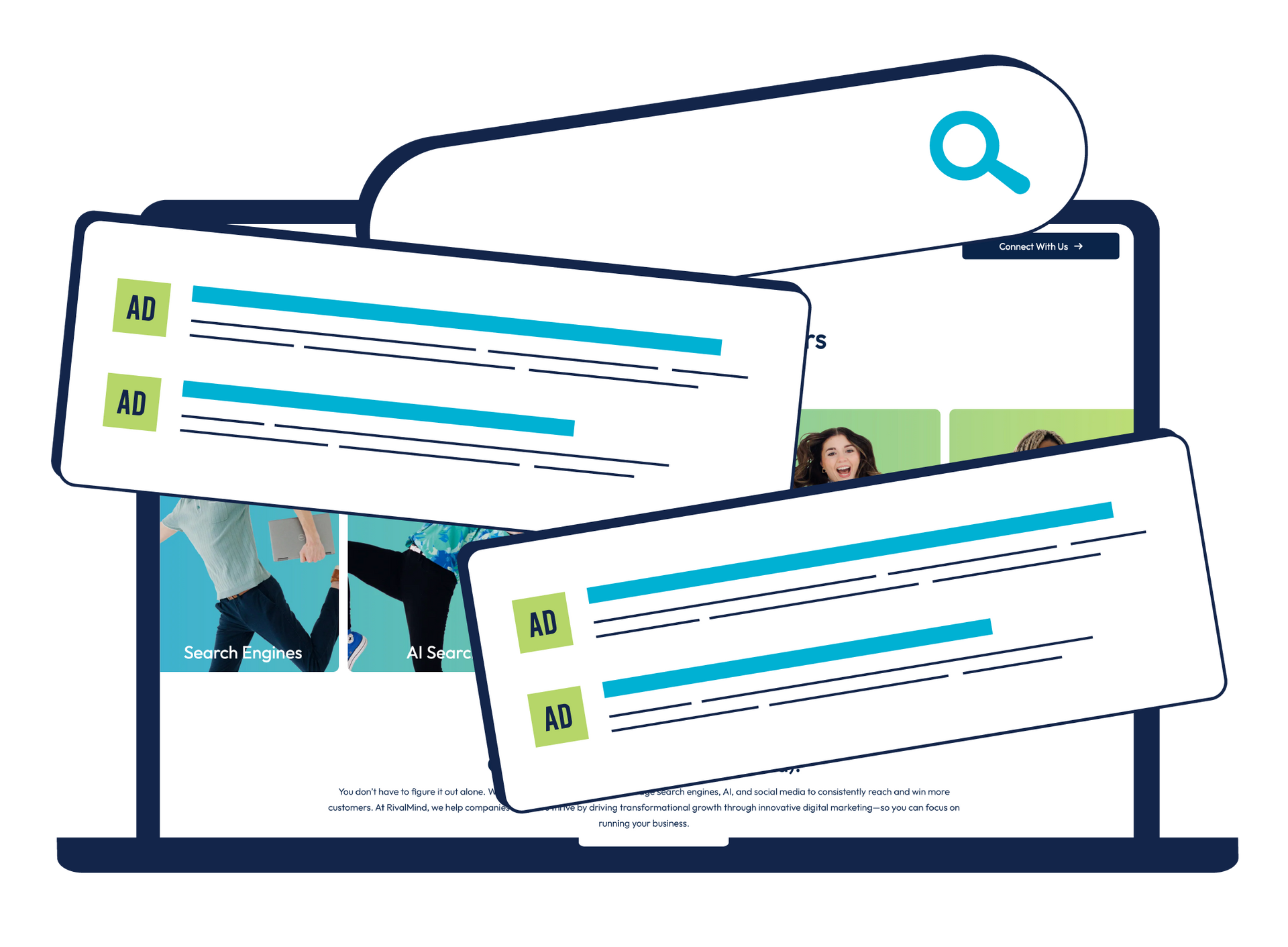
Choose the Right Platform for the Job
It's easy to get caught up in choosing the "best" advertising platform, but there isn't one. The right choice depends on your business, your audience, and how people make buying decisions.
For many B2B companies, high-intent
Google Search campaigns are a natural starting point because they capture people actively looking for a solution. Pairing Search with LinkedIn helps keep your business in front of decision-makers throughout a longer sales cycle, building familiarity until they're ready to take the next step.
E-commerce businesses often benefit from a more visual approach. Shopping Ads and Performance Max campaigns make it easier for buyers to compare products, prices, and reviews, helping them move from browsing to buying with fewer obstacles.
For local service businesses, visibility is everything. Search campaigns and Local Services Ads help put your business in front of people who need help now, whether they're searching for a plumber, roofer, or another provider.
The platform matters, but it's only part of the equation. The ad format should match how your customers prefer to evaluate and compare their options. Some buyers respond best to a straightforward text ad, while others need a product image or video before they're ready to engage. The best campaigns aren't built around what's trending. They're built around how your customers prefer to buy.
Turn Interest Into Action
A strong PPC campaign doesn't end when someone clicks your ad. That's really just the first step. You still have to make sure what they find on the other side of that click matches what they were looking for and makes it easy for them to take the next step.
We saw this firsthand with an
online pet pharmacy we worked with. Getting more traffic wasn't necessarily the problem. We needed to make sure we were getting the right products in front of the right people, so we spent time improving their Google Merchant Center feed, including product titles, descriptions, categorization, and overall feed quality.
Those might seem like small changes, but they add up. The better Google understands what you're selling, the better chance you have of matching your products with someone who's actually looking for them. And when that person clicks, you want the experience to feel consistent with what brought them there in the first place.
That work was part of a larger PPC strategy that ultimately generated nearly $400,000 in revenue with a 7.08 return on ad spend. It's a good reminder that improving PPC performance isn't always about chasing more clicks. Sometimes it's about getting more out of the opportunities you already have.
Small Adjustments, Better Results
Launching a campaign isn't the finish line. It's where we start learning what's actually driving results. Like a round of golf, you don't make a decision based on one swing. You give yourself enough information to understand what's happening, make an adjustment, and see how the next shot plays out.
We take a similar approach with PPC. After a campaign launches, we give it time to collect enough data before making major changes. From there, we're looking for patterns. A low click-through rate might tell us the ad copy isn't connecting, while a strong click-through rate with a low conversion rate can point to an issue with the landing page. The goal isn't to make changes just for the sake of optimizing. It's to understand what the data is telling us and make the right adjustment.
That can mean pausing keywords that consistently underperform so more budget can go toward the ones producing results. We also look at search terms that have converted for opportunities to add new keywords, while building out negative keywords to avoid spending money on searches that aren't relevant or don't show enough intent. Along the way, we'll test different ad copy and assets to keep learning what resonates.
For eCommerce campaigns, we can take that even further. When certain products consistently generate a strong ROAS and conversion value, we'll move them into a dedicated best-seller campaign and
put more of the budget behind them. Instead of spreading ad spend evenly across every product, we're leaning into what's already proving it can generate revenue.
That's really what ongoing PPC optimization comes down to. You learn from the data, make a smart adjustment, and keep building on what's working. The individual changes might seem small, but over time they can have a pretty big impact on how efficiently your budget turns into revenue.
Avoid the Mistakes That Drain Your Budget
Running paid ads isn't just about launching campaigns. It's about making hundreds of small decisions along the way, and even minor missteps can have a real impact on performance.
Take location targeting, for example. If you're trying to reach customers in your service area, there's a big difference between showing ads to people who are physically there and people who have simply shown interest in that location. Choosing the wrong setting can lead to paying for clicks that were never likely to become customers.
It's also easy to give too much credit to the last click. Someone might discover your business through a paid ad, come back through an organic search a week later, and then finally reach out after reading a few reviews. Looking at the full customer journey, rather than a single interaction, gives you a much better understanding of what's actually influencing revenue.
The biggest mistake, though, is assuming a campaign can run on autopilot. Markets change, competitors adjust their strategies, and customer behavior shifts over time. PPC isn't something you set up once and forget about. The campaigns that generate consistent revenue are the ones that continue to evolve alongside the businesses they're supporting.
Bring it All Together
Successful PPC campaigns are the result of hundreds of thoughtful decisions over time. They grow through clear goals, reliable data, thoughtful optimization, and an experience that makes it easy for customers to take the next step. When those pieces work together, it becomes much easier to understand what's driving results and where there are opportunities to improve.
If your campaigns aren't delivering the return you're looking for, taking a closer look at the data can reveal opportunities that aren't always obvious. Small adjustments to your targeting, messaging, landing pages, or tracking can have a meaningful impact over time.
Every business has different goals, customers, and challenges, which is why PPC strategies should never be one-size-fits-all. A free PPC audit from
RivalMind can help you better understand your current performance, uncover opportunities for improvement, and build a stronger foundation for future growth.
Looking for more organic website traffic?
Welcome to RivalMind. Our purpose is to help your business thrive. We are a digital marketing agency that offers SEO, PPC, Web Design, Social Media and Video Solutions as tools to our clients for online business development and growth.
Contact us today to get started!
Blog Contact Form
We will get back to you as soon as possible.
Please try again later.