Local SEO Guide - Local Search Marketing Strategies Explained
Local SEO is important for brick-and-mortar businesses and businesses with a localized target market. Like national or global SEO, local SEO involves a variety of strategies and best-practices to achieve prominence in the digital landscape.
Below, we explore the core tenants of local SEO:
How Does Google's Local Algorithm Work?
Machine learning means that it is impossible to truly pin down exactly how any of Google's search algorithms work on any given day; only an active Google engineer is capable of giving completely accurate advice on this topic.
That said, marketers track trends and identify statistics to identify the most effective local search marketing strategies.
Backlinks Are Key
For all the changes made to Google's search algorithm over the years, backlinks remain heavily correlated with search ranking, including results tailored for local queries. Backlinks have long been the foremost strategy for business SEO, and this is no different for local businesses.
For small businesses, this is a particular advantage. Local competition is less likely to engage in large-scale backlinking and other SEO techniques.
Google Business Profiles Boost Local Results
Embracing the Micro-Moment
Over the last year, Google has emphasized a concept known as the micro-moment – the motivation behind a search. According to Google, these micro-moments can be broken down into four classifications, each of which influences the way a search engine results page displays content.
- I-want-to-buy micro-moment
- I-want-to-do micro-moment
- I-want-to-know micro-moment
- I-want-to-go micro-moment
The category into which Google places a search drives the kinds of results available, with I-want-to-buy moments showing shopping results and I-want-to-do moments offering tutorials and YouTube guides.
When planning SEO strategies, understanding how and why information is displayed can be critical, helping local businesses best target web users with the information they need to know in a format Google is most likely to show.
The Rise of Hyperlocal Results
Local SEO has long been a marketing tactic for brick-and-mortar operations but the rise in searches using terms like "near me," combined with Google's geotagging capabilities, has led to an evolution strategists are calling hyperlocal.
As opposed to isolating searches by general location data, Google goes deeper, offering suggestions in a user's immediate vicinity. While there's no way to force proximity to searchers, businesses are advised to optimize content to fit as many search parameters as possible to best serve those who do hit Google while close by. With new filtering options available right on the SERPs themselves, the more information you make available, the better.
Can I Tackle Local SEO Without a Set Location?
Focus on Individual Locations
Omit Addresses in Business Listings
Create Regional Pages for Your Largest Markets
Do you offer plumbing services in Manhattan, Brooklyn, the Bronx, Jersey City, Newark, and Yonkers? Does your fleet of rental vans service the entire Northeast? If you expand across several major metros, or even multiple smaller metros, create separate pages for each target market.
When customers from Brooklyn search for a plumber, a resource in Yonkers isn't going to be helpful. Instead, you need your customers to know that you're in their market and eager to help. With customized landing pages for each city, state, or neighborhood you serve, you can be sure you're targeting the right searchers on the web.
Set a Local Directory Radius
If you have several stores in the same vicinity, it's going to be critically important that you differentiate the radius that applies to each one. Even if some of your stores are quite close, you don't want to inadvertently scare a customer off by showing him a store 10 miles away instead of one mile.
By carefully mapping out where your locations are situated, where your customers are coming from, and how far they're willing to travel, you can be specific about selecting the areas each of your locations serve on your Google Business Profile. The more specific you are, the better, and the more likely you are to resonate with your target market.

Want a free same-day SEO health scan?
No strings attached - receive a comprehensive report covering 140 unique data points about your website's technical SEO health in 24 hours or less!
Free Same Day Scan - Blog Form
We will get back to you as soon as possible.
Please try again later.
What is the Google 3 Pack?
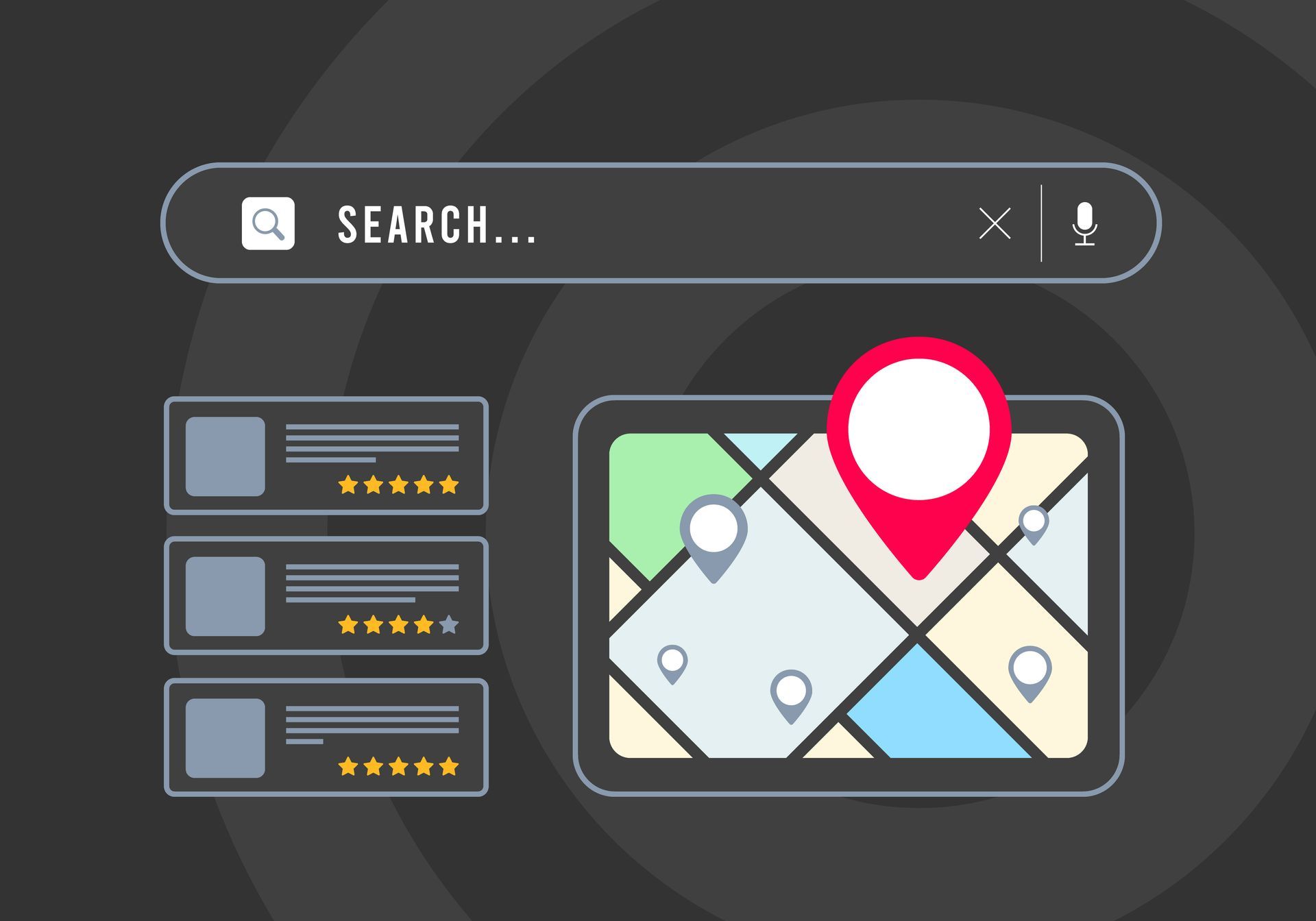
The Google 3 Pack is the holy grail of local SERP rankings. 46% of Google searchers are looking for local information, and the 3 Pack appears in the SERP nearly every time. Almost all searchers click on a result from the first page, especially the first three rank positions. Utilizing a few local SEO practices, you can improve your rankings – ultimately aiming for placement in the Google 3 Pack.
If you search “Best Deep Dish Pizza,” Google will display the results in an order that is most relevant for you, based on location proximity and previous search history. Google’s aim is to guide you to the closest location that also meets the criteria “Best Deep Dish Pizza.” The top three results on the search engine results page (SERP) will differ, depending on your geographical location, always guiding you to three top-rated pizza locations near you. These top three results are often compiled into an easy-to-access “pack:” the Google 3 Pack.
How does the 3 Pack impact local SEO?
How can I rank in the 3 Pack?
Complete your Google Business Profile
First, ensure that you have claimed your Google Business Profile. Then, fill out the fields with detailed, accurate information. Incorrect Google Business Profile information hurts your credibility on Google. Because nearly all people learn about local businesses online, correct information could not be more important.
Furthermore, pay close attention to local directory consistency. If various directories display differing information about your business, Google will see your company as unreliable. Tools like Yext and Moz Local can help you manage your directories.
Build local backlinks
Gather positive Google reviews
Improve your on-page SEO
What is a Google Business Profile?
Google Business Profile (formerly Google My Business) is the name of Google’s business directory, providing information about companies of all sizes, including business name, hours of operation, contact information, and website links. Google Business Profile results show up automatically, generally to the right or at the top of organic search engine results.
In many cases, this information is pulled from other sources, like Facebook pages or websites, which means that it’s more or less correct. As such, many small business owners simply claim ownership of the listing and move along. However, this isn’t adequate for competitive organizations.
Success on the Google Business Profile
If you want a presence that counts, there are plenty of steps you can take to boost your odds. Keep these tips in mind when building out your GBP.
Confirm accuracy
In general, web users trust what they find on Google. If they see business hours or a contact number, there’s no reason to believe this information is anything but correct. Accordingly, if this data is wrong, it’s going to shake prospective customers’ faith in your business.
If you see any issues with your profile, including phone number, hours of operation, or address, update these as soon as possible. Even issues like hours being slightly off can alter customer perceptions – especially if they show up at your storefront to find it closed.
Add images
As the adage goes, a picture is worth a thousand words, and this holds true in business. Before visiting a storefront, most customers like to have a good idea of what they’re getting into. In order to provide more context to your operations, your brand identity, and the caliber of services customers can expect, images are extremely useful.
Managing expectations can be a valuable way of making sure you can deliver what customers anticipate, and images or video of your location, your products, or even your team can help to do this.
Regularly create Google Posts
Answer questions
Your Google Business Profile is intended to provide a wealth of information to potential shoppers. This includes the opportunity to ask questions. Users can inquire about anything through Google Business Profiles, providing an additional way for you to share the information consumers want to know.
There’s a catch to this, however: business owners aren’t the only ones with permission to post responses. Any Google user can answer questions, so if you don’t take the lead, someone else may do it for you — and there’s no guarantee that you’ll like what they have to say. Instead of rolling the dice and risking wrong answers or unfair criticism, take it upon yourself to provide accurate responses to questions posed to your business.
Respond to reviews
Reviews are a critical part of maintaining a reputation online, and Google is a popular place for customers to leave feedback. As with other review sites, Google Business Profiles provide an avenue for businesses to respond to reviews, opening the door for acknowledgment, appreciation, and, if necessary, apologies.
Responding is especially important when you receive criticism, constructive or otherwise. Negative reviews are a way of life for most businesses, but there’s no need to let false or misrepresentative information stand. Without clarification, consumers browsing your listing may believe inaccurate reviews, harming your reputation.




Local SEO vs National SEO
For optimal digital success, every business must identify if local or national SEO is the best. The answer can effectively guide the course of a campaign, homing in on the most likely customers and improving the likelihood of generating convertible leads.
Local SEO
Local SEO keywords are often geo-specific, such as the names of neighborhoods, cities, states, and counties. Many companies with a local approach ensure listings are current on directories like Google My Business, Angie's List, and Yelp! utilize language and phrases familiar to local searchers, and include specific language to trigger search results for those in the greater metro area. Local SEO is best for those with a physical location, or several physical locations, with limited exposure on a larger scale.
National SEO
Determining Your Best Path
If you're not sure where to best focus your attention, taking an objective look at your audience, your goals, and the effectiveness of your current campaigns can help guide the process.
- Who is your key demographic? Where do they reside?
- Do you have a physical location customers visit, or do they place their orders and receive products or services remotely?
- Does your mailing address have any bearing on the nature or quality of services provided?
- Do your customers tend to come from one specific area or is there little consistency in who shops with you?
- Are you striving to create connections in your local community, or do your business objectives disregard an area presence?
How you answer these questions will provide direction, helping you to determine if a local strategy is most effective for you. Keep in mind, your SEO can take multiple forms; for example, businesses with a physical location and local customers as well as a thriving online business should employ local and
national SEO strategies.
RivalMind: Digital Marketing Agency
Optimizing your website and local directories to meet Google’s standards and appear in coveted rankings takes time, consistency, and a keen concentration on Google’s ever-changing ranking factors.
Determined to dedicate your time on other important aspects of your business? Talk to a trustworthy, results-driven search marketing agency. RivalMind is dedicated to providing SEO services that actually improve your company’s visibility. Contact us today to talk about expert, genuine SEO.

Meet the Author
Josiah Flex
Head of Business Development
Josiah Flex, a digital marketer, is passionate about helping companies see real, lasting growth. With a background in personal training, he enjoys helping people identify and achieve their goals – from online visibility to increased leads. Ultimately, consumers use search engines, like Google, to identify the best answer for their needs, and companies engaged in great SEO have the highest likelihood of winning prospective consumers, one step at a time. This is true success.
Specialties: Building Client Relationships, RivalMind Hype Guy
Looking for more organic website traffic?
Welcome to RivalMind. Our purpose is to help your business thrive. We are a digital marketing agency that offers SEO, PPC, Web Design, Social Media and Video Solutions as tools to our clients for online business development and growth.
Contact us today to get started!
Blog Contact Form
We will get back to you as soon as possible.
Please try again later.