What is the Importance of a Visual Website Sitemap?
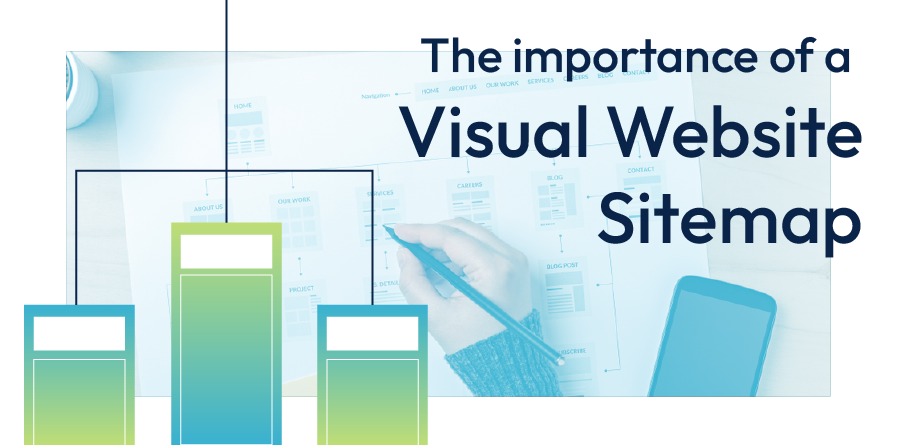
At RivalMind, we begin every development project with a detailed, custom visual website sitemap and have seen the importance of this tool in action, inspiring us to create this guide.
Architectural sitemaps are one of the most potent yet underutilized tools in website design, often overlooked by development agencies and business owners. As the name implies, architectural sitemaps flesh out a website’s architecture, outlining the organization hierarchy of the site – from global navigation to page structure – before design or development begins.
The results?
- A strategic, efficient, and thoughtful design/ development process
- A powerful final product
Below, we illustrate the importance of a custom website sitemap, outlining purpose, benefits, tools, and creation.
What is the Purpose of a Visual Sitemap?
An architectural sitemap is an organized collection of website pages and page sections, outlining website hierarchy and page hierarchy.
- Website hierarchy determines what pages will live on the website and where they will be located.
- Page hierarchy determines what sections of content will live on pages and how they should be arranged. Essentially, this is the order of importance of information on each page.
Most business owners and developers can determine what content to include on a website but fail to strategically design this content to be compelling and informative. If these traits are lacking, you will lose website visitors.
Eliminate the lurkers
Beyond content design, page hierarchy highlights strategic places for calls to action (CTAs). Compelling pages with clear direction on how to convert reduces the number of people lurking on your website pages without acting.
The architectural sitemap ensures that the correct placement and type of CTAs are included on each page before designers and developers are put to work.
What Are the Benefits of a Sitemap?
The benefits of sitemaps for clients
The benefits of sitemaps for developers
The benefits of sitemaps for designers
The benefits of sitemaps for SEOs
Our Top Visual Sitemap Tool Recommendations
Sitemaps can be created from scratch or with a tool designed for the task.
If you choose to take a manual approach, Microsoft Word, Adobe Illustrator, and Adobe Photoshop can all accomplish the task.
However, these tools may be more time consuming than tools designed to complete this task. Explore these 5 popular options as a starting point.
Octopus is an excellent visual sitemap program with a variety of attractive features, including low fidelity wireframes, Figma integration, content block colors, and sitemap exporting (on paid plans only). Octopus offers a free plan with limited functionality; paid plans range from $8 to $100.
Slickplan features a drag and drop interface for simple, user-friendly sitemap creation. Slickplan sitemaps can also be exported as PDF files or shared via an HTML link. Like many other sitemap tools, Slickplan offers a limited free version, and paid plans range from $10 to $103/month.
Dyno Mapper is a visual sitemap tool with commenting functionality that allows for efficient collaboration between teams. Like many other sitemap tools, Dyno Mapper allows for sitemaps to be built from scratch and can also crawl existing XML sitemaps to create a visual representation of a website. Though Dyno Mapper has a free trial, monthly pricing ranges from $49 to $360, including a variety of other features offered by Dyno Mapper beyond sitemaps.
WriteMaps is a manual sitemap builder, excellent for smaller projects. Sitemap blocks can be customized by color, re-ordered, and renamed. Individual pages can be customized with images, title tags and meta descriptions, and text. WriteMaps can be accessed with a limited free version, and paid plans range from $15 to $30/ month.
GlooMaps specializes in efficient sitemap design, with keyboard shortcuts to expedite the process. GlooMaps is excellent for creating simple sitemaps with minimal style options. Unlike the other options listed below, GlooMaps is entirely free to use and does not require a user profile. Sitemaps can be accessed for 14 days after creation, unless they are revisited. New visits extends access for another 14 days. GlooMaps sitemaps can be shared with team members via URL. Sitemaps can also be exported to PDF, XML, or PNG.
What is the Process of Building a Sitemap?
- Determine general topics of information
- Divide topics into specific pages
- Outline which subtopics should be included on each page
- Determine where and how frequently to include a CTA, specifically regarding conversion
- Outline internal links; how to get from one page to the next for related topics
- Determine an SEO/ keyword targeting strategy
FAQs About Visual Sitemaps
Do you need a sitemap to build a website?
Technically, no, but we highly recommend one! A sitemap makes the entire design and development process more efficient and organized. Planning makes perfection. Developing without a sitemap is a bit like navigating a foreign country without guidance. In all odds, you will eventually reach your destination, but the journey will be needlessly inefficient, time-consuming, and exasperating.
Can you modify the sitemap once it's built?
Yes, you can modify your sitemap – carefully. Make sure your hierarchy remains clear and easy to understand from a user’s perspective. Your sitemap should present the information YOU want your visitors, including who you are, what you do, why the visitor should care, pricing, information on your products/ services, and CTAs.
RivalMind: Strategic Development Services
Architectural sitemaps outline an entire website before development, demanding an in-depth understanding of a client from the beginning. Most importantly, sitemaps ensure that insights from the client and from marketing experts are translated to the website.
To talk with a member of our team, get in touch at 331.228.9636, on our online contact form, or via DM on any of our social media platforms. We look forward to starting a conversation!

Meet the Author
Jessica Goodrum
Director of Content Marketing
Jessica Goodrum is the Marketing Director at RivalMind, responsible for brand management, marketing, social media, and networking. With over a decade of experience in digital project management, Jessica has a proven track record in driving business growth through innovative marketing strategies. She oversees the direction and success of RivalMind's marketing efforts and collaborative relationships, always striving to create authentic connections and deliver exceptional results. Jessica’s management philosophy is rooted in transparency, and clearly communicating project goals and the necessary steps to achieve them is a top priority.
Specialties: Brand Management, Media Relations, Keeping It All On Task
Looking for more organic website traffic?
Welcome to RivalMind. Our purpose is to help your business thrive. We are a digital marketing agency that offers SEO, PPC, Web Design, Social Media and Video Solutions as tools to our clients for online business development and growth.
Contact us today to get started!
Blog Contact Form
We will get back to you as soon as possible.
Please try again later.